For Architects
A Builder You Can Trust With Your Client’s Project
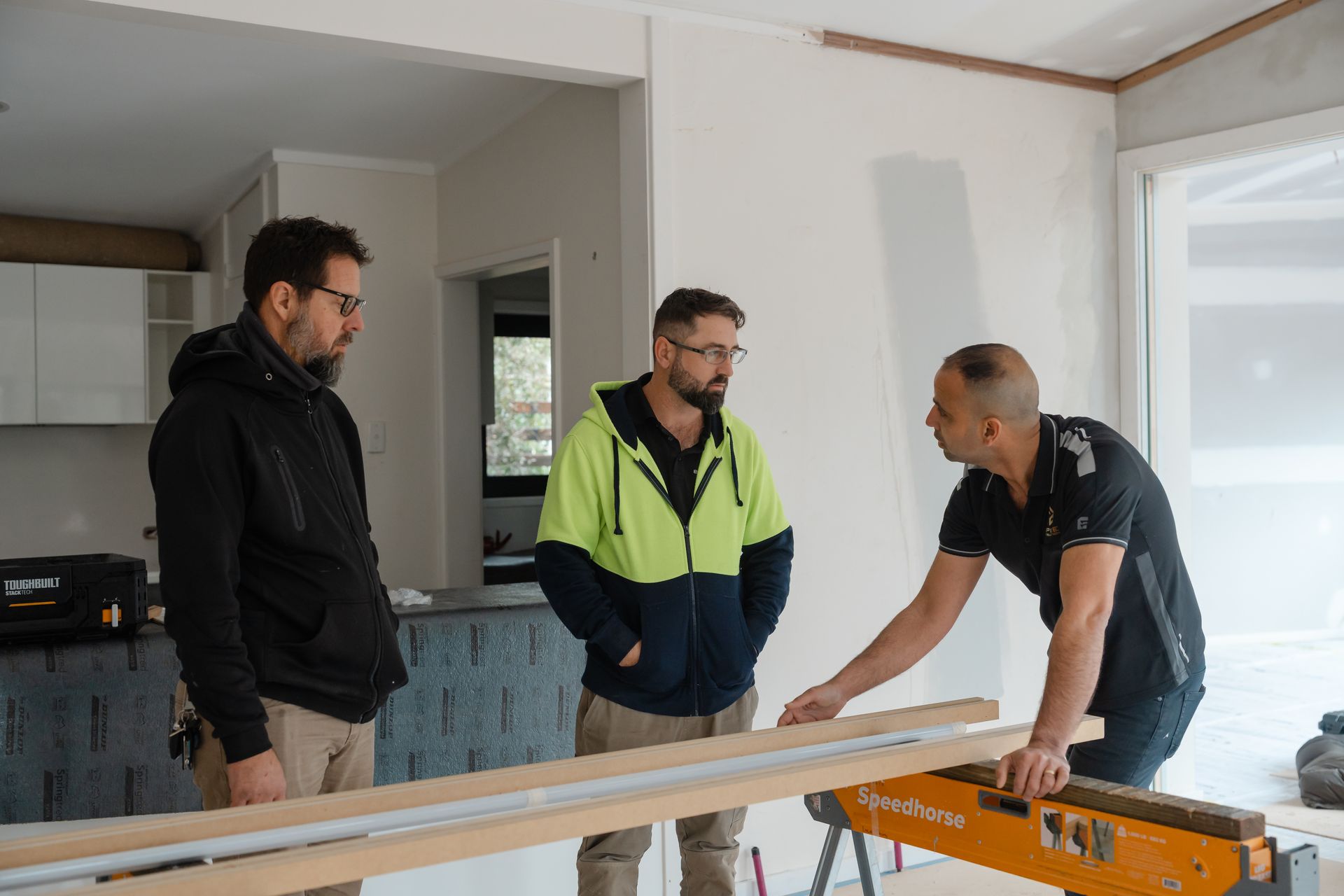
What the site does to a drawing
Your drawings represent the ideal world. Reality very often is different.
On a renovation in an older Canberra suburb this happens on nearly every job. A brick base with backfill sitting behind it. Rock where the excavation was meant to be straightforward. Asbestos somewhere nobody expected. A wall that is not quite where the survey says it is.
None of that is a criticism of the documentation. It is what happens when a drawing meets a house somebody built sixty years ago. What matters is what your builder does next. You will hear from me the same day, with what I have found, what it means for the design intent, and at least two or three ways forward for you to choose between.
What's it like working with Mahdi?
Hear from Tash Bonney, Co-Director of ENFOLD Architecture.
You keep the relationship.
I'll do the explaining.
The hardest part of any project is never the build. It is the conversation when something changes and someone has to tell the client. I do not go around you to do that, and I do not make you the one explaining a decision you did not make.
If a variation comes up, I bring it to you first, with the cost, what caused it, and the options, so you can decide how and when your client hears it. If a detail in the drawing will not work on site, that conversation happens between us, not in front of the people who trust you to have it right.
I am not on the tools to build my own name. I am here to build what you designed, and to make sure you never look bad for having me on the job.

Licences and the paperwork
ACT Builder's Licence 2024343 Class A
NSW Builder's Licence 457516C Unrestricted
ABN 15 983 290 067
Licensed subcontractors for all electrical, plumbing and gasfitting work
Built to the National Construction Code

Questions architects ask
Do you identify problems in the documentation before they become a site issue?
Yes. I read the drawings properly before I price, and I raise anything that does not add up as a question rather than guessing at an answer. It is slower up front and it is the reason my pricing holds once we are on site.
Are you comfortable working through RFIs?
Yes, and I would rather send one than build a guess into the house. An RFI from me comes with what I think the answer might be and why, so you are responding to a proposal rather than starting from a blank page.
What happens when a detail in the drawing will not work on site?
I do not say it cannot be done and stop there. I come back to you with why it is a problem and at least two ways through it, so you are choosing between options rather than being told no.
Are your subcontractors capable of high detail work?
Yes. I work with a small group of trades I have used for years, chosen because they can execute detailed work properly, not because they are the cheapest quote.
Do you communicate variations properly?
Yes. Nothing proceeds until it is priced and agreed. You get the cost, the cause and the options in writing the same day, so you decide how your client hears it rather than finding out after the fact.
Do you price transparently?
Yes. Every submission is itemised, with the assumptions I have priced against and the exclusions stated plainly, so you can compare it against another builder's submission line by line.
Will you protect my relationship with my client?
Yes. Any hard conversation happens between us first. I do not go around you, and I do not put you in a position where you look bad in front of the people who trust you.
Will you collaborate, or will this turn into a builder versus architect argument?
Collaborate. Disagreements happen on every job. Mine get worked through between us before they reach your client, never in front of them.
Consider me on your next tender list
If you have something coming up, I would like to price it. If you would rather see how I work before you put a client in front of me, come and walk a site with me first.
Either way, the conversation costs you nothing.